
Cosmetic dental treatment is any procedure that improves the appearance of your teeth – covering concerns like discoloration, chips, gaps, or shape. Choosing the right option depends entirely on what you actually want to fix, not just what sounds appealing.
This guide focuses specifically on helping you match the right cosmetic dental option to your actual concern – so you get results you’re happy with, not just results you settled for.
Most people start researching cosmetic dental work because something specific is bothering them. Maybe your coffee habit has caught up with your smile. Maybe you chipped a tooth years ago and never had it fixed. Or maybe you’ve always been self-conscious about the shape of your teeth. The most common mistake patients make is choosing a procedure based on price or popularity rather than what their situation actually calls for. Professional dental guidance consistently points to matching treatment options to a patient’s specific clinical needs and personal goals.
At Cochran Family Dental in Leesburg, VA, we hear this question constantly: “Which one should I get?” The honest answer is – it depends on what’s bothering you.
What Each Option Actually Does
Teeth whitening: A bleaching process – either in-office or at-home – that lightens the natural color of tooth enamel by removing stains caused by food, drinks, or tobacco.
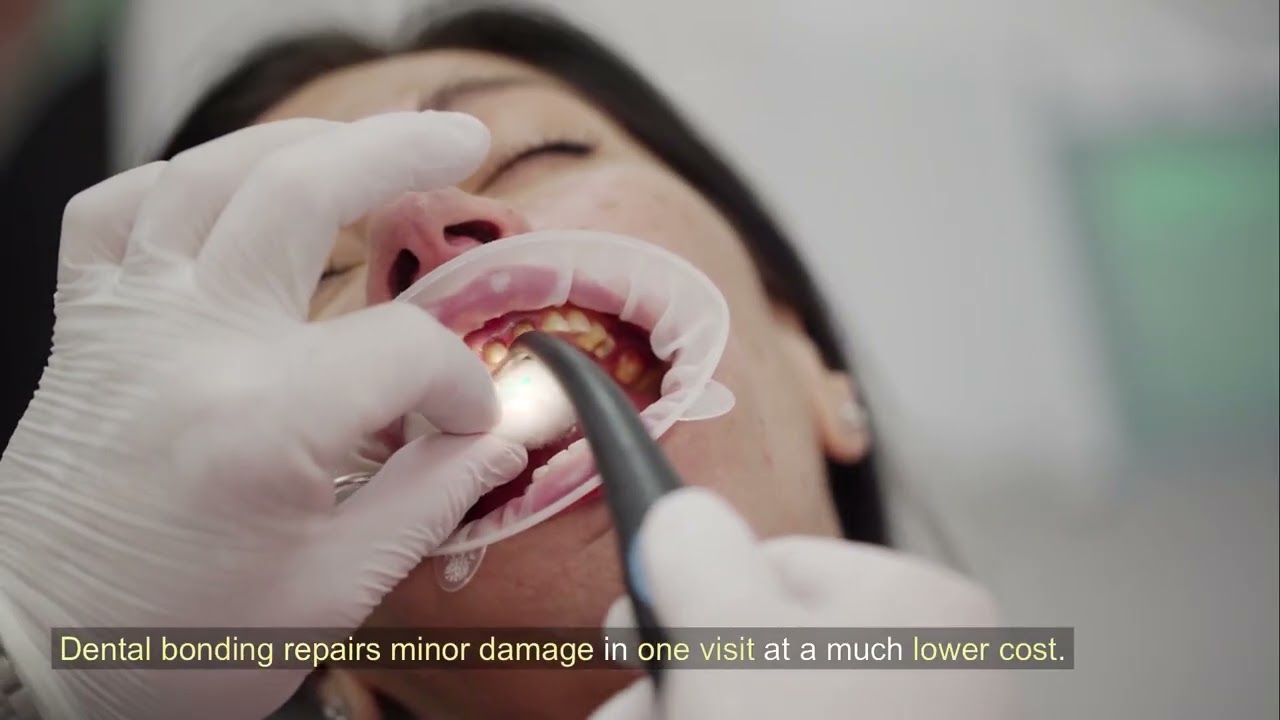
Dental bonding: A tooth-colored composite resin applied directly to the tooth surface, sculpted, and hardened with a curing light – used to fix chips, cracks, gaps, and minor shape irregularities.
Dental veneers: Thin shells of porcelain (or composite) custom-made and permanently bonded to the front surface of teeth to change color, shape, size, or length.
Each one solves a different problem. Whitening can’t fix a chip. Bonding can’t correct deep internal staining. Veneers are overkill for a single minor discoloration. Getting clear on the difference saves you money and frustration.
Veneers vs Bonding vs Whitening: Which Approach Works?
| Option | Typical Cost (2025) | Timeline | Lasts | Best For |
|---|---|---|---|---|
| Teeth Whitening | $300 – $800 in-office | 1-2 hours | 1-3 years | Surface stains, general discoloration |
| Dental Bonding | $300 – $600 per tooth | 1 visit | 5-10 years | Chips, cracks, small gaps, minor shape issues |
| Porcelain Veneers | $900 – $2,500 per tooth | 2-3 visits | 10-20 years | Multiple concerns at once, major reshaping |
Cost ranges reflect general 2025 national averages. Actual fees vary by provider, location, and case complexity.
Where whitening succeeds: Fast, affordable, non-invasive. Works well for food, coffee, tea, and tobacco staining on natural teeth.
Where whitening fails: Can’t fix chips, gaps, or shape issues. Won’t work on crowns, veneers, or bonding material. Doesn’t correct internal (intrinsic) staining from medications or trauma.
Where bonding succeeds: Fixes structural flaws in a single appointment with no enamel removal. Reversible. Great for isolated chips and small gaps.
Where bonding fails: Stains more easily than porcelain over time. Less durable under heavy bite pressure. Not ideal for multiple teeth with several concerns.
The verdict: Start with whitening if stain is your only concern. Choose bonding if you have a chip or small gap on one or two teeth. Consider veneers when you want a complete change across several teeth or have multiple overlapping issues that bonding can’t fully address.
Thinking about which option fits your situation? Contact us and we’ll walk you through your choices – no pressure, just honest answers.
The Problem-First Decision Framework
Here’s a straightforward way to think about it. Ask yourself what is actually bothering you – then match it to the right tool.
- Yellow or stained teeth with no structural damage – start with professional teeth whitening
- One chipped or cracked tooth – bonding is usually the right call
- A noticeable gap between front teeth – bonding works well for minor gaps; veneers for larger ones
- Worn-down, uneven, or misshapen teeth across your smile – veneers give the most complete result
- Staining that didn’t respond to whitening – bonding or veneers can mask it permanently
- A combination of shape issues and discoloration – veneers address both at once
According to the National Institute of Dental and Craniofacial Research, patients who understand their specific concerns before treatment consultations report significantly higher satisfaction with cosmetic outcomes. Knowing what you want fixed is half the battle.
Your Cosmetic Dental Decision Checklist
- Identify the exact problem: Write down specifically what bothers you – color, shape, size, chips, gaps. Be precise.
- Consider your timeline: Whitening and bonding can happen in one visit. Veneers take 2-3 appointments over several weeks.
- Assess your budget honestly: Whitening is lowest cost. Bonding mid-range. Veneers are a longer-term investment per tooth.
- Think about longevity: If you want results that last 15+ years with minimal upkeep, porcelain veneers outperform the others.
- Check your insurance: Most cosmetic procedures are not covered. Some policies include partial credit for bonding if it restores function.
- Schedule a consultation: A dentist can examine your enamel thickness, bite, and gum health – factors that affect which options are even possible for you.
Pre-Consultation Checklist:
- ☐ Photos of your smile showing the specific concern
- ☐ List of any prior dental work (crowns, fillings, implants)
- ☐ Notes on habits like coffee, tea, wine, or tobacco use
- ☐ Budget range you’re comfortable discussing
- ☐ Questions about longevity and maintenance
Common Mistakes That Lead to Disappointment
The most frequent issue we see is patients choosing whitening for a problem that whitening can’t solve – specifically, teeth that look dark because of old bonding material or a dead tooth. Bleaching products work on natural enamel only. They won’t touch composite resin or porcelain, and they can’t reach internal discoloration from tooth trauma.
Another common misstep is getting bonding when veneers would genuinely serve you better. Bonding is great for isolated issues, but composite resin picks up stains from coffee and wine noticeably faster than porcelain. If you’re meticulous about maintenance, bonding can look great for years. If you’re not, it can look dull within 3-4 years.
Recent data shows roughly 60% of patients who request veneers could actually achieve their goal with bonding at a fraction of the cost – and about 20% who start with whitening alone end up needing bonding or veneers afterward because their concern was never just about color. A thorough consultation in 2025 should include a clear discussion of all three options before any treatment begins.
Key Takeaways for Cosmetic Dental Patients in 2025
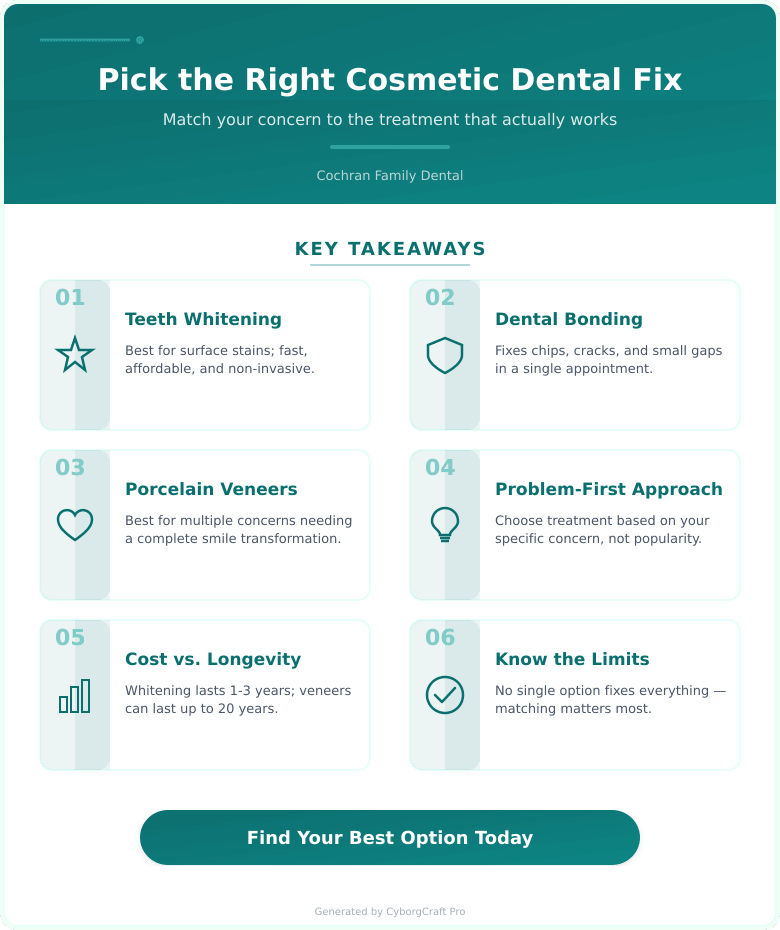
- Match the treatment to the problem – not to the price or what a friend recommended
- Whitening is the lowest-risk starting point if discoloration is your primary concern
- Bonding fixes structural issues fast and is reversible, unlike veneers
- Veneers deliver the most durable complete result but require the most commitment
- A consultation with X-rays and photos is the only reliable way to know what will actually work for your teeth
Frequently Asked Questions
How much do veneers cost without insurance?
Porcelain veneers typically range from $900 to $2,500 per tooth in 2025, depending on location and case complexity. Most dental insurance plans classify veneers as cosmetic and do not cover them, so the full cost is usually out-of-pocket.
Does teeth whitening hurt?
Some patients experience temporary tooth sensitivity during or after professional whitening, but it typically resolves within 24-48 hours. Patients with existing sensitivity or thin enamel should discuss this with their dentist before starting any bleaching treatment.
How long does dental bonding last?
Dental bonding generally lasts 5 to 10 years with proper care before it may need touch-ups or replacement. Avoiding habits like nail biting, chewing ice, or biting hard foods extends the lifespan of bonding significantly.
Can I whiten my teeth after getting veneers or bonding?
Whitening products do not change the color of porcelain veneers or composite bonding material. If you want to whiten, the best approach is to whiten your natural teeth first, then match any bonding or veneer work to that new shade.
Are veneers permanent?
Veneers are considered a long-term commitment because a small amount of enamel is typically removed to place them. They last 10-20 years and will eventually need replacement, but they cannot be reversed once the enamel is prepared.
What is the fastest cosmetic dental option?
In-office teeth whitening is the fastest option, often completed in a single 60-90 minute appointment. Dental bonding also usually takes just one visit. Veneers require multiple appointments across several weeks for custom fabrication and placement.
Who is not a good candidate for veneers?
Patients with significant tooth decay, gum disease, or very thin enamel may not be good candidates for traditional porcelain veneers. Heavy teeth grinding (bruxism) can also damage veneers prematurely, so that condition typically needs to be addressed first.
Your Next Step Toward a Smile You’re Actually Happy With
You don’t have to figure this out alone. The right cosmetic option comes down to your specific teeth, your specific concern, and your specific goals – and that’s a conversation worth having in person. Patients from Leesburg, Ashburn, Purcellville, Hamilton, and the broader Loudoun County area visit Cochran Family Dental for exactly this kind of honest, straightforward guidance.
Ready to take the next step? Contact us today to schedule a cosmetic consultation. We’ll look at what you want to fix, show you which options apply, and give you a clear picture of what each path actually involves – no surprises, no pressure.
Note: This content is for general educational purposes and does not substitute for professional dental advice. Please consult a licensed dentist for evaluation and personalized treatment recommendations.