
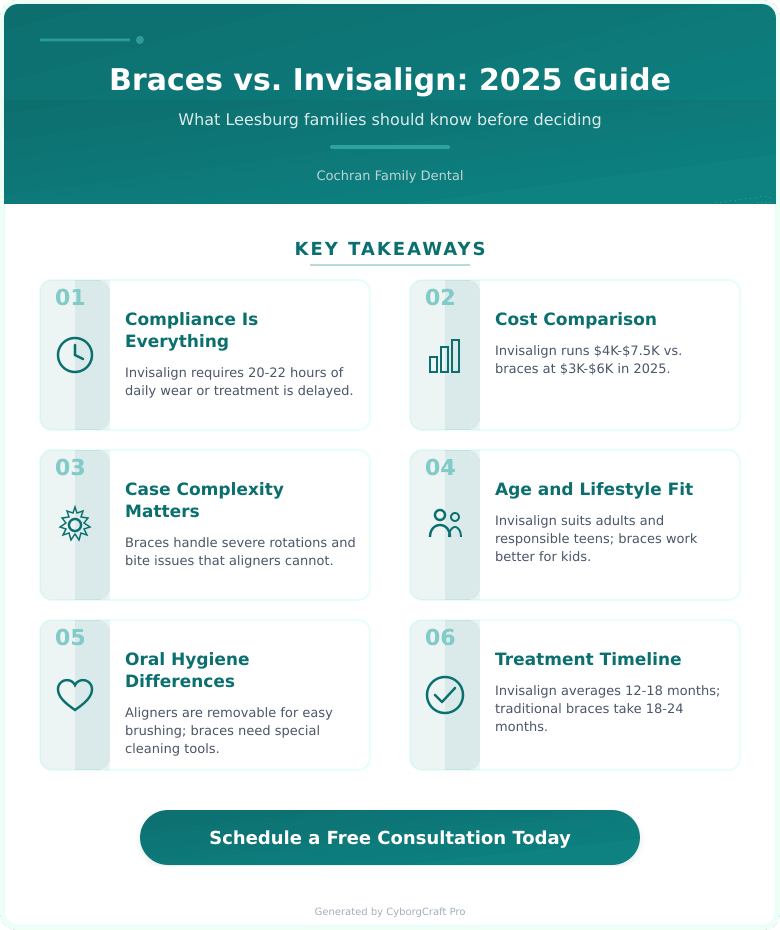
Invisalign vs. traditional braces is a comparison between two orthodontic systems that straighten teeth – one using a series of removable clear aligners, the other using fixed metal or ceramic brackets and wires bonded to teeth. The right choice depends on age, case complexity, lifestyle, and budget, and getting it wrong can cost you time and money.
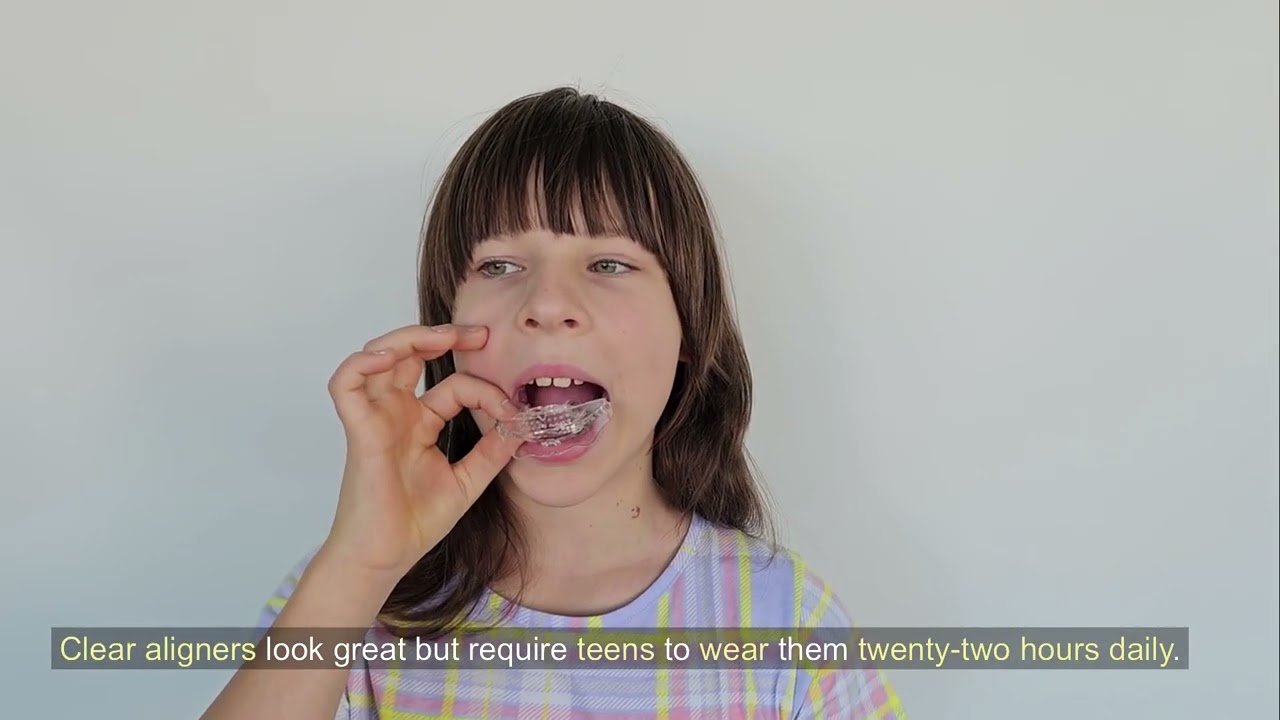
This guide focuses specifically on helping Leesburg families make a confident, informed orthodontic decision in 2025 – before signing any treatment agreement.
Orthodontic Treatment Definition: Orthodontic treatment is a structured process of gradually repositioning teeth and adjusting bite alignment using controlled force applied over weeks or months through brackets, wires, or custom-fitted aligners.
The most common mistake families make is choosing an orthodontic path based on aesthetics alone – usually favoring clear aligners because they look less obvious – without fully accounting for compliance demands, case suitability, or total cost over time. Both systems work. But each one has a clear home turf where it outperforms the other.
How Each System Actually Works
Traditional braces: Brackets bonded directly to each tooth with an archwire threaded through them. Your orthodontist tightens or adjusts the wire at regular appointments, typically every 4-8 weeks, to guide teeth into position. You can’t remove them. They work continuously, day and night.
Invisalign (clear aligners): A series of custom-molded trays, each worn for 1-2 weeks, that apply gentle, incremental pressure. You remove them to eat and brush. They require 20-22 hours of daily wear to stay on schedule. Skipping wear time extends your treatment – sometimes significantly.
According to the American Dental Association, both methods are clinically effective for most malocclusion cases, but patient compliance is the most critical variable in aligner-based treatment outcomes.
Invisalign vs. Traditional Braces: Which Approach Works?
| Feature | Invisalign | Traditional Braces |
|---|---|---|
| Visibility | Nearly invisible | Visible (clear brackets reduce this) |
| Removability | Yes – must wear 20-22 hrs/day | No – fixed in place |
| Average Cost (2025) | $4,000 – $7,500 | $3,000 – $6,000 |
| Treatment Length | 12-18 months (mild to moderate) | 18-24 months (most cases) |
| Best For | Adults, compliant teens, mild-to-moderate cases | Complex cases, younger children, low-compliance patients |
| Cleaning | Easy – remove and brush normally | Requires special tools around brackets |
Where Invisalign succeeds: Aesthetics during treatment, oral hygiene maintenance, comfort without sharp wires, and flexibility for adults who can manage compliance responsibly.
Where Invisalign fails: Severe rotations, significant bite correction, back-tooth movement, and patients – especially younger teens – who won’t consistently wear trays the required hours per day.
Where traditional braces succeed: Complex alignment cases, patients who need constant controlled force, children and early teens who aren’t responsible for managing removable devices, and cases involving significant vertical movement.
Where traditional braces fail: Patient confidence during treatment due to appearance, dietary restrictions (no popcorn, sticky foods), and the discomfort that follows tightening appointments.
The verdict: For mild-to-moderate spacing and crowding in adults or responsible teens, Invisalign delivers comparable results with less lifestyle disruption. For children under 13, complex bite issues, or patients with compliance concerns, traditional braces are the more reliable path.
Thinking about this for your family’s situation? Let’s talk. The team at Cochran Family Dental can walk you through your options – no pressure, just honest answers. Contact us to schedule a conversation.
What Families in Leesburg Should Factor In
Families in and around Leesburg, VA are making these decisions with a few local realities in mind. Virginia’s cost of living and regional dental market trends mean orthodontic pricing sits at the mid-to-upper range nationally. Most general dental practices in the area can initiate an orthodontic consultation and refer to an orthodontic provider, or handle aligner-based treatment directly depending on case complexity.
Patients from Ashburn, Purcellville, Sterling, Hamilton, and Broadlands routinely seek dental care in the Leesburg corridor. If your family travels for school activities or sports – common in Loudoun County – the removability of clear aligners can be a practical advantage. But so can the set-it-and-forget-it reliability of braces for a busy kid’s schedule.
Insurance coverage varies widely. Most plans that include orthodontic benefits cover a lifetime maximum of $1,000-$2,000 per patient, applying to either treatment type. Flexible Spending Accounts (FSAs) and Health Savings Accounts (HSAs) can offset the remaining out-of-pocket cost for both options in 2025.
For more information on oral health and orthodontic considerations, the National Institute of Dental and Craniofacial Research offers evidence-based guidance that can help families ask better questions during consultations.
Your Orthodontic Decision Checklist
- Step 1 – Get a full clinical assessment: Before comparing costs, confirm which treatments your provider considers appropriate for your specific case. Not every case is a candidate for clear aligners.
- Step 2 – Evaluate compliance honestly: If this is for a child or teen, be realistic about whether they’ll wear aligners 20+ hours daily without reminders. Braces remove that variable entirely.
- Step 3 – Compare full treatment cost: Ask for total cost including retainers, follow-up visits, and any refinement trays – not just the starting price.
- Step 4 – Confirm insurance and financing: Verify your plan’s orthodontic lifetime maximum and ask about payment plans before committing.
- Step 5 – Ask about retainer requirements: Both systems require retainers after treatment. Factor this into your long-term plan.
- Request before-and-after case examples from your provider
- Ask how many refinement rounds are included in the Invisalign fee
- Confirm who handles emergencies (broken bracket, lost tray)
- Clarify appointment frequency for each option
See how our approach to family dental care compares – explore our cosmetic and smile services or visit our contact page to start a conversation with our team.
Key Takeaways for Leesburg Families in 2025
- Both systems work – the difference is case suitability and patient lifestyle, not quality of outcome.
- Compliance is everything with aligners – skipping wear time directly extends treatment and can reduce effectiveness.
- Cost difference is shrinking – Invisalign and braces are now much closer in price than they were even five years ago.
- Insurance covers both equally – orthodontic benefits typically apply to either treatment without preference.
- Your provider’s assessment matters most – self-selecting Invisalign without a clinical review is one of the most common and costly mistakes families make.
Frequently Asked Questions
Is Invisalign more expensive than braces in 2025?
Invisalign typically costs $4,000-$7,500 nationally in 2025, compared to $3,000-$6,000 for traditional braces, though the gap has narrowed considerably. Final pricing depends on case complexity, provider, and geographic market. Always ask for an all-inclusive quote that covers retainers and follow-up visits.
Can my child get Invisalign instead of braces?
Children as young as 7-8 can be assessed for orthodontic needs, but Invisalign is generally recommended for teens 13 and older who can reliably manage tray compliance. Younger children with active growth and compliance challenges are typically better candidates for traditional braces or palatal expanders first.
How long does Invisalign take compared to braces?
Invisalign treatment for mild-to-moderate cases typically runs 12-18 months, while traditional braces average 18-24 months for comparable cases. Complex cases with significant bite correction may require longer treatment regardless of which system is used.
Does orthodontic treatment hurt?
Both systems cause temporary soreness after adjustments or tray changes, typically lasting 2-4 days. Most patients describe it as pressure rather than sharp pain. Over-the-counter pain relievers and soft foods during adjustment periods help manage discomfort effectively.
Will dental insurance cover Invisalign?
Most dental plans with orthodontic benefits apply the same lifetime maximum – usually $1,000-$2,000 – to both Invisalign and traditional braces without favoring one over the other. Confirm your specific plan’s terms before starting treatment, and ask your dental office to verify benefits on your behalf.
Do I need a retainer after treatment?
Yes – retainers are required after both Invisalign and traditional braces to prevent teeth from shifting back. Most orthodontists recommend full-time retainer wear for several months post-treatment, followed by nightly wear indefinitely. This is a long-term commitment regardless of which treatment you choose.
The Bottom Line for Leesburg Families
There’s no universal winner here. The right orthodontic choice is the one that fits your family’s biology, budget, and lifestyle – not the one that looks best in an advertisement. Get a proper clinical assessment, ask direct questions about total cost and compliance expectations, and make sure whoever you’re working with takes time to explain your options clearly.
Ready to take the next step? Contact Cochran Family Dental today for straight answers and a no-pressure consultation. Our team welcomes families from across Leesburg, VA and the surrounding Loudoun County communities.