
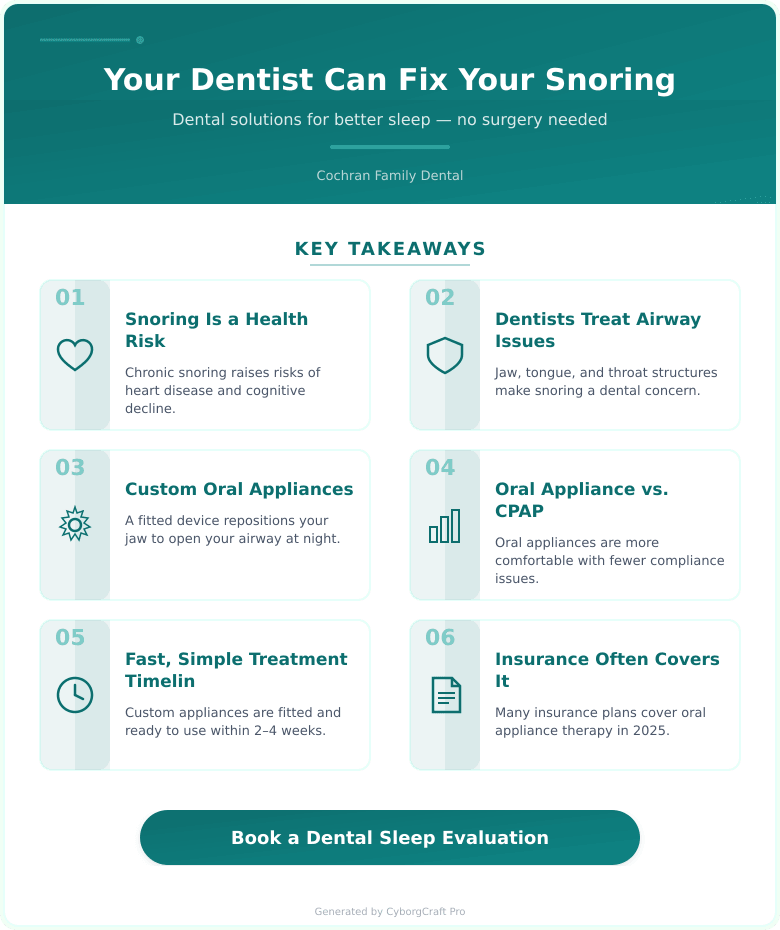
Snoring treatment from a dentist is a non-surgical approach that uses custom-fitted oral appliances to reposition the jaw and airway during sleep, reducing or eliminating disruptive snoring. For many patients, this is a more comfortable and accessible solution than a CPAP machine or surgery.
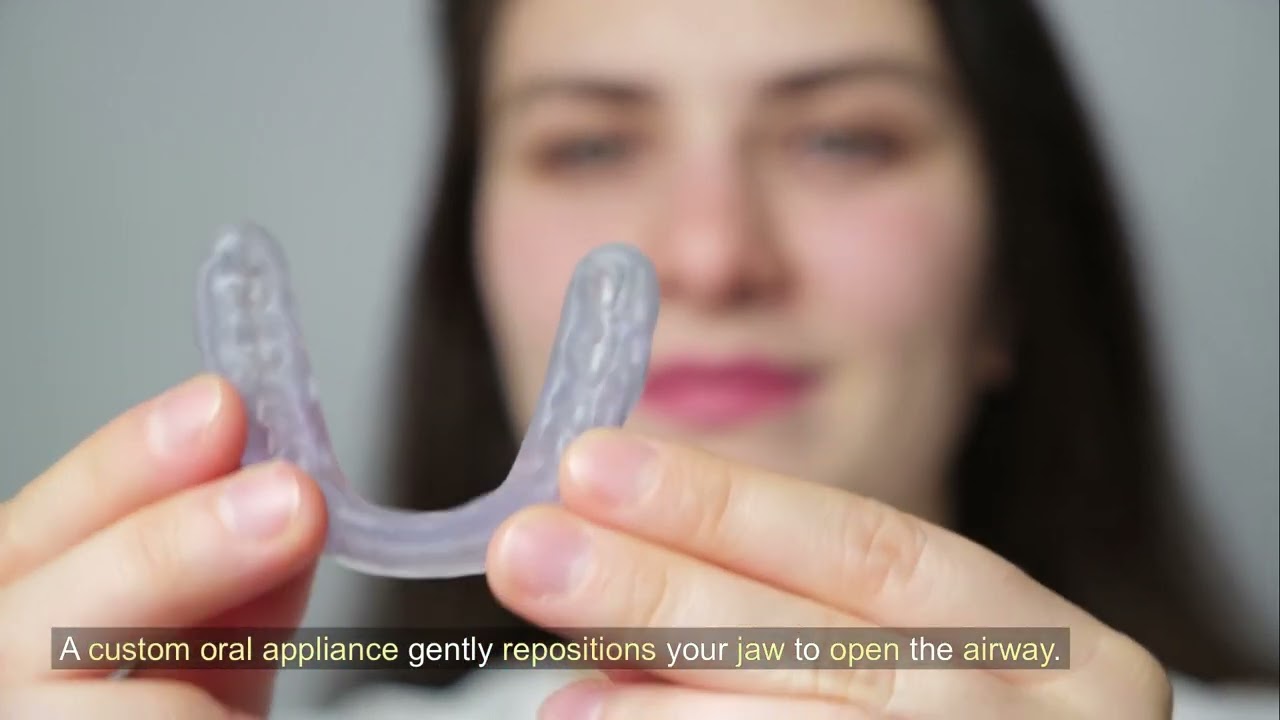
This guide focuses specifically on dental-based snoring treatment options for adults in and around Leesburg, VA who want real relief without complicated medical procedures.
Snoring Treatment Definition: A clinical intervention that addresses airway obstruction during sleep by repositioning the jaw, tongue, or soft palate – typically through a custom oral device prescribed and fitted by a dental provider.
Snoring is widely recognized as an underaddressed health concern among adults. Most people chalk it up to sleeping position or stress and move on. But chronic snoring is often a sign that something real is happening with your airway – and left unaddressed, it can chip away at sleep quality, cardiovascular health, and your relationship. The good news is that a dentist can often help in ways most people never expect.
Why Snoring Is a Dental Issue (Not Just a Sleep Issue)
Most people think of snoring as a sleep medicine problem. But the mouth, jaw, and throat are deeply connected – and dentists are trained to evaluate the structures that contribute to airway restriction. The soft tissue at the back of your throat, the position of your tongue, and the way your jaw rests during sleep all influence whether you snore.
According to the National Institute of Dental and Craniofacial Research, oral and facial structures play a significant role in sleep-disordered breathing, which is why dental providers are increasingly part of the solution.
The most common mistake people make is assuming snoring is harmless. Recent data shows that untreated obstructive sleep apnea – of which snoring is the primary symptom – raises the risk of high blood pressure, heart arrhythmias, and daytime cognitive impairment. According to the American Dental Association, dentists are now recognized as key screening providers for sleep-disordered breathing in adults.
Thinking about this for your situation? Let’s talk. Contact us at Cochran Family Dental and we’ll walk you through what a dental evaluation actually involves – no pressure, no commitment required.
Oral Appliance Therapy vs. CPAP: Which Approach Works?
Where oral appliance therapy succeeds: Comfortable, portable, and silent. Most patients adapt within a few nights. No mask, no hose, no machine noise. Highly effective for mild to moderate snoring and sleep apnea. Covered by many insurance plans in 2025.
Where oral appliance therapy fails: Less effective for severe obstructive sleep apnea on its own. Requires periodic adjustment and replacement. Some patients experience minor jaw soreness early in treatment.
Where CPAP succeeds: Gold standard for severe obstructive sleep apnea. Delivers consistent airway pressure throughout the night. Well-supported by long-term research.
Where CPAP fails: Low compliance rates – studies show roughly 50% of patients stop using CPAP within the first year. Uncomfortable mask fit, noise, and travel inconvenience are the top complaints. Not ideal for mild to moderate snoring cases.
The verdict: For mild to moderate snoring or apnea, oral appliance therapy is often the better starting point. It works for most patients, fits easily into daily life, and doesn’t require electricity or a machine on the nightstand. For severe cases, a dentist and sleep physician may coordinate a combined approach.
| Option | Cost Range (2025) | Timeline | Best For |
|---|---|---|---|
| Custom oral appliance | $1,800 – $3,500 | 2-4 weeks to fit | Mild to moderate snoring/apnea |
| CPAP therapy | $500 – $3,000+ with supplies | Immediate use | Severe obstructive sleep apnea |
| Over-the-counter snore guard | $30 – $150 | Same day | Occasional mild snoring only |
| Surgical intervention | $5,000 – $10,000+ | Weeks of recovery | Structural anatomical obstruction |
Cost ranges reflect general industry data for 2025 and are not specific to any individual practice’s fees.
Your Snoring Treatment Action Plan
- Step 1 – Document your symptoms: Track how often you snore, whether you wake up gasping, and how rested you feel. This helps your dentist triage severity before your first visit.
- Step 2 – Schedule a dental screening: A dental exam for snoring includes evaluation of your airway, jaw position, tongue size, and bite. This takes one appointment and doesn’t require a separate sleep clinic referral to get started.
- Step 3 – Get a sleep study if needed: Your dentist may coordinate with a sleep physician to confirm whether obstructive sleep apnea is present. Home sleep studies are now widely available in 2025 and covered by most insurance.
- Step 4 – Receive your custom appliance: If an oral appliance is appropriate, impressions are taken and a device is fabricated to fit your exact jaw anatomy. Fitting takes a second visit.
- Step 5 – Follow up and adjust: Most patients return within 4-6 weeks for calibration. The appliance can be fine-tuned as your jaw adapts.
Pre-Appointment Checklist
- ☐ Note how many nights per week snoring occurs
- ☐ Ask your partner if you stop breathing or gasp during sleep
- ☐ List any morning headaches, dry mouth, or fatigue
- ☐ Bring your current dental insurance card
- ☐ Note any prior CPAP use or sleep study results
- ☐ List all current medications, especially sleep aids or blood pressure drugs
What Snoring Actually Does to Your Health
Obstructive sleep apnea (OSA): A condition where the airway partially or fully collapses during sleep, causing repeated breathing interruptions and fragmented rest.
Hypopnea: A partial airway obstruction that reduces airflow by at least 30%, causing a measurable drop in blood oxygen – often present in patients who snore regularly but don’t meet the full criteria for apnea.
Current data from sleep medicine research shows that roughly 80% of people with moderate to severe sleep apnea are undiagnosed. That means millions of adults in the U.S. are sleeping through a health issue that a dentist could help identify. As of early 2025, the ADA actively encourages dental providers to screen patients for sleep-disordered breathing at routine visits.
At Cochran Family Dental, patients in Leesburg, VA and surrounding communities including Ashburn, Purcellville, Lansdowne, Hamilton, and the broader Loudoun County area have access to dental-based snoring evaluations. If you’ve been wondering whether that nightly noise is more than a nuisance, it’s worth asking at your next visit. You can also explore our teeth whitening in Leesburg, VA and other services while you’re here.
Key Takeaways for Snoring Patients in 2025
- Snoring is often treatable by a dentist – oral appliance therapy is clinically validated and widely covered by insurance
- CPAP isn’t the only option – for mild to moderate cases, a custom dental appliance often works just as well with far better compliance
- Early screening matters – the longer snoring goes unaddressed, the greater the downstream cardiovascular and cognitive risk
- Your dentist can coordinate care – dental providers work alongside sleep physicians when a full sleep study is needed
- Over-the-counter devices are not a substitute – generic snore guards don’t reposition the jaw correctly and can worsen bite issues over time
Frequently Asked Questions
Can a dentist actually treat snoring?
Yes – dentists are qualified to prescribe and fit custom oral appliances specifically designed to reduce snoring and mild to moderate sleep apnea. This is a recognized area of dental care supported by the American Dental Association, and many dental insurance plans cover it in 2025.
How much does a dental snoring appliance cost without insurance?
Custom oral appliances for snoring typically range from $1,800 to $3,500 nationally as of 2025, depending on the device type and provider. Many medical insurance plans (not just dental) contribute to the cost when a sleep apnea diagnosis is documented.
How long does it take to get used to a snore guard?
Most patients adjust to a custom oral appliance within one to two weeks. Minor jaw soreness early on is normal and typically resolves as the muscles adapt. Follow-up adjustments fine-tune comfort and effectiveness.
Is snoring always a sign of sleep apnea?
Not always, but snoring is the most common symptom of obstructive sleep apnea and should be evaluated rather than ignored. Snoring without apnea can still disrupt sleep architecture and impair rest quality for both you and your partner.
What’s the difference between a custom and over-the-counter snore guard?
A custom appliance is fabricated from precise dental impressions and calibrated to your specific jaw anatomy, while over-the-counter versions use generic sizing that rarely fits correctly. Poorly fitting devices can cause bite changes and discomfort over time.
Does dental insurance cover snoring treatment?
Coverage varies by plan, but many medical insurance policies cover oral appliance therapy when obstructive sleep apnea is diagnosed through a sleep study. Dental plans may cover the fabrication costs separately. Your dentist’s office can verify your benefits before treatment begins.
When should I see a dentist vs. a sleep professional for snoring?
Start with your dentist if you have primary snoring or suspect mild to moderate apnea – they can screen, refer, and treat as appropriate. A sleep professional is recommended when snoring is accompanied by severe daytime sleepiness, witnessed apnea episodes, or cardiovascular complications.
Ready to Sleep Better – Here’s What to Do Next
Snoring tends to get written off. But the pattern we see consistently is this: patients who address it early feel dramatically better – better sleep, better energy, and yes, better relationships. Don’t wait another year to find out what’s actually happening with your airway.
Ready to take the next step? Contact us at Cochran Family Dental in Leesburg, VA to schedule a snoring evaluation. We’ll give you straight answers about what your options are and what makes sense for your specific situation. Book now because appointment availability for new patients fills quickly, especially heading into fall 2025.
This content is for informational purposes only and is not a substitute for professional medical or dental advice. If you experience gasping, choking during sleep, or severe daytime sleepiness, seek evaluation from a qualified provider promptly.