
Porcelain crowns vs. composite fillings is one of the most common treatment decisions in restorative dentistry, and the right choice depends on how much tooth structure remains, where the tooth sits in your mouth, and how much chewing force it handles daily. Choosing the wrong option can mean redoing the work in a year or two – or losing the tooth entirely.
This guide focuses specifically on how dentists evaluate damaged teeth and match each patient to the right restorative option – so you walk into your next appointment informed.
Restorative Dentistry Definition: Restorative dentistry repairs or replaces damaged tooth structure using materials like composite resin or porcelain to restore function, appearance, and long-term oral health.
According to the American Dental Association, tooth decay affects nearly 90% of adults at some point in their lives. The volume of patients facing this exact decision every year is staggering – and the most common mistake dentists see is patients assuming a filling will always do the job when a crown is actually what the tooth needs.
What Each Option Actually Does
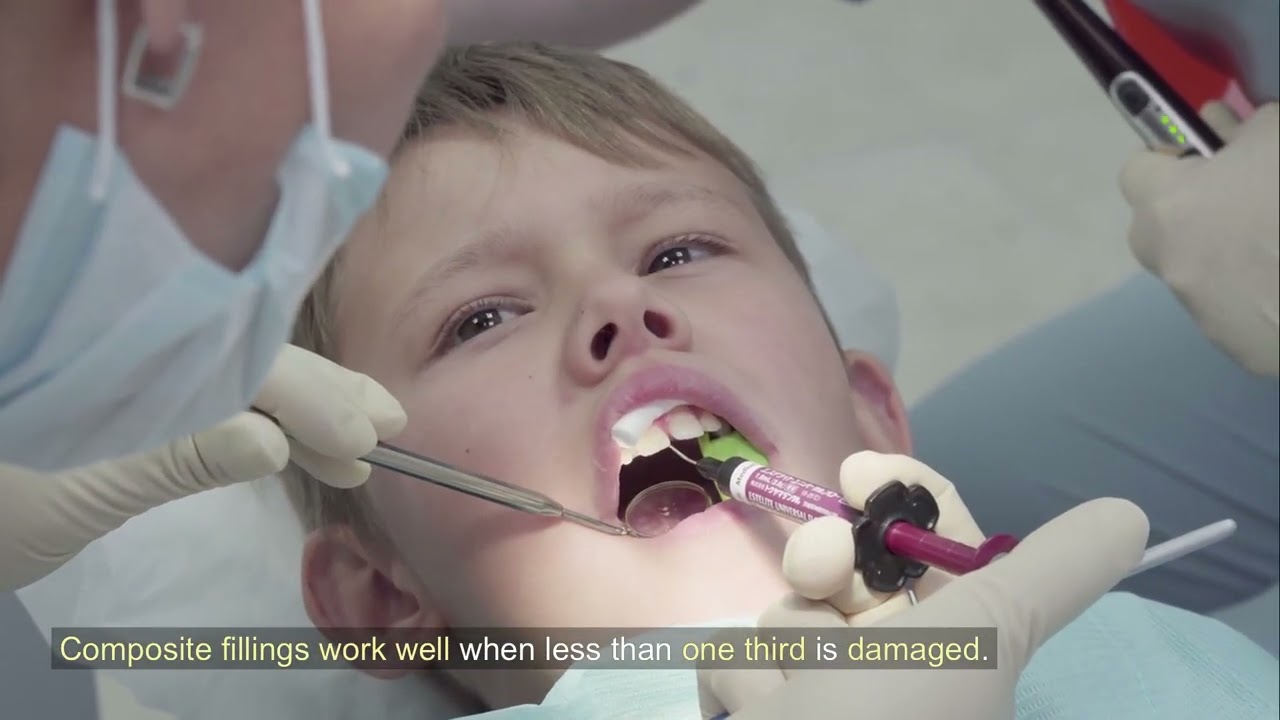
Composite filling: A tooth-colored resin material bonded directly into a cavity or small fracture, replacing only the damaged portion of a tooth.
Porcelain crown: A custom-made cap that fits over the entire visible portion of a tooth, protecting it from further fracture and restoring full biting function.
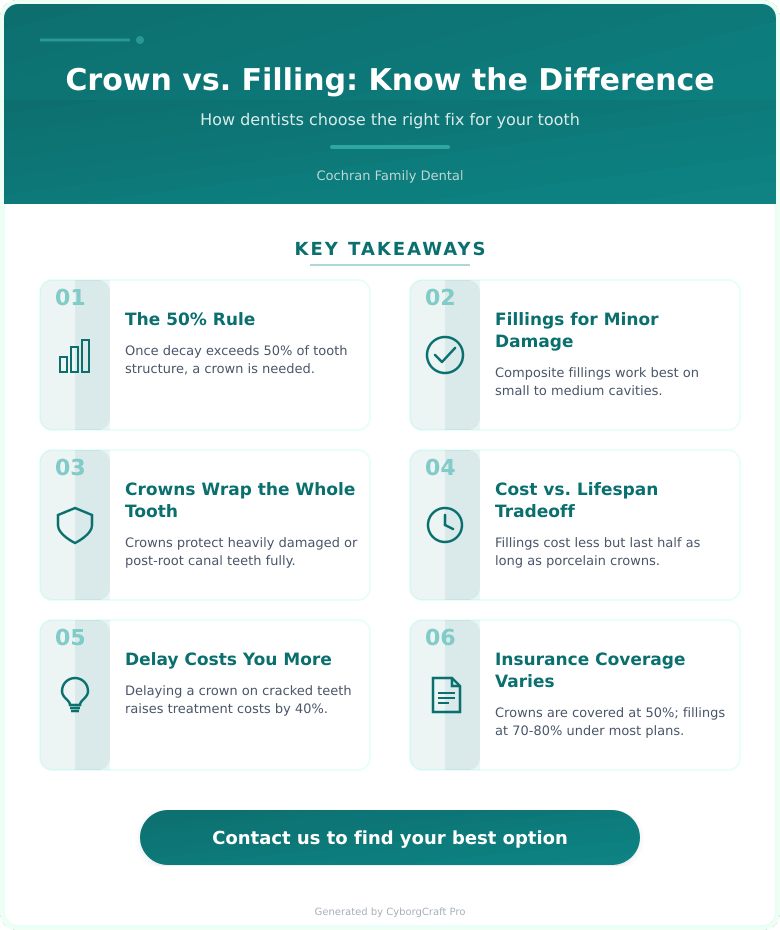
The key difference is coverage. Fillings patch a hole. Crowns wrap the whole tooth. That distinction matters a lot once more than 50% of a tooth’s natural structure is gone.
Porcelain Crowns vs. Composite Fillings: Which Approach Works?
Where composite fillings succeed: Small to medium cavities with healthy surrounding structure, early-stage decay caught before it spreads, and situations where the bite load is moderate (front teeth or premolars with minimal fracture).
Where composite fillings fail: Large cavities where the remaining tooth walls are thin, cracked teeth under heavy molar pressure, and teeth that have had root canals (which become brittle and fracture easily without a crown).
Where porcelain crowns succeed: Teeth with extensive decay or old failing fillings, cracked tooth syndrome, post-root canal protection, and molars that absorb the majority of chewing force every day.
Where porcelain crowns fail: Situations where a patient lacks adequate tooth height for crown retention, cases where gum health issues haven’t been resolved first, and budget situations where a well-placed filling can legitimately buy several more years of function.
The verdict: If decay or damage involves less than one-third of the tooth’s biting surface, a composite filling is the right call. Once that threshold crosses 50% or a cusp is missing, a porcelain crown protects your investment and the tooth far better over time.
Thinking about this for your specific tooth? Contact us and we’ll walk you through your options – no pressure.
Cost Comparison: What to Expect in 2025
| Option | Typical Cost (2025) | Lifespan | Best For |
|---|---|---|---|
| Composite Filling | $150 – $400 per tooth | 5-10 years | Small to medium cavities |
| Porcelain Crown | $1,000 – $1,800 per tooth | 10-25 years | Large decay, cracks, post-RCT |
These are general industry ranges, not the specific fees of any one practice. Insurance typically covers 50% of crown costs when deemed medically necessary (2025 plan averages). Composite fillings are usually covered at 70-80% under basic restorative benefits.
Recent data shows patients who delay crown placement on a cracked tooth spend an average of 40% more in total treatment costs within two years – often because the crack progresses and the tooth requires extraction and an implant.
How Leesburg Dentists Actually Make This Call
At Cochran Family Dental, located in Leesburg, VA, the evaluation process follows a clear clinical framework rather than a one-size-fits-all protocol. Here’s how the decision typically unfolds in practice.
Phase 1: Diagnostic Assessment (Appointment Day)
Digital X-rays and intraoral camera images show the extent of decay below the gumline and between teeth. A transillumination test (shining a light through the tooth) can reveal cracks invisible on X-rays.
Key actions during this phase:
- Measure the remaining healthy tooth structure percentage
- Check for crack lines extending toward the root
- Evaluate bite force on that specific tooth
Phase 2: Material and Technique Selection (Same Visit)
Once the damage scope is clear, the dentist selects the restorative approach. For borderline cases – where a tooth is right at that 40-50% damage threshold – the current best practice in 2025 leans toward crowns rather than large fillings, because oversized composites have higher failure rates on posterior teeth.
Phase 3: Treatment and Follow-Up (1-2 Appointments)
Composite fillings are typically completed in one visit. Porcelain crowns usually require two: one to prep and place a temporary, one to bond the permanent crown after the lab fabricates it. Some offices now use CAD/CAM technology for same-day crowns.
Your Restorative Treatment Action Plan
- Step 1 – Get a current X-ray: If it’s been more than 12 months, decay progresses quickly and your last images may not reflect current damage.
- Step 2 – Ask about the damage percentage: Request that your dentist tell you what percentage of the tooth structure is affected. This one number drives the crown-vs-filling decision.
- Step 3 – Check insurance benefits before treatment: Confirm whether your plan covers the recommended procedure at what percentage and whether a pre-authorization is required for crowns.
- Step 4 – Understand the longevity math: A filling that costs $300 but fails in four years costs more over a decade than a crown placed correctly the first time.
- Step 5 – Follow post-treatment care instructions: Composite fillings can stain and wear faster without proper home care. Crowns need the same flossing attention as natural teeth at the gumline.
For a complete overview of restorative options, visit our dental services page or schedule a consultation.
Pre-Appointment Checklist
- ☐ Bring your current dental insurance card and know your annual maximum
- ☐ List any tooth sensitivity, pain with biting, or visible cracks
- ☐ Note how long symptoms have been present
- ☐ Ask whether your employer’s FSA or HSA covers dental crowns
- ☐ Request a written cost estimate before treatment begins
Key Takeaways for Leesburg Patients in 2025
- Damage percentage drives the decision – under 33% favors fillings, over 50% almost always warrants a crown
- Post-root canal teeth nearly always need crowns – the tooth becomes brittle and cracks without full coverage
- Porcelain crowns last significantly longer – 10-25 years versus 5-10 years for composite fillings
- Delaying a crown costs more long-term – cracks that reach the root typically mean extraction
- Same-day CAD/CAM crowns are now widely available in 2025 – no second appointment needed at many modern practices
Frequently Asked Questions
How do I know if my tooth needs a crown or a filling?
The primary indicator is how much natural tooth structure remains after decay or damage is removed. If less than half the tooth is intact, a crown protects what’s left. Your dentist can show you the X-ray and explain the measurement.
How long does a porcelain crown last?
Porcelain crowns typically last 10-25 years with proper care. Longevity depends on bite habits, home hygiene, and whether the crown was placed on a tooth with ongoing gum disease. Grinding can shorten lifespan significantly without a nightguard.
Is a porcelain crown covered by dental insurance?
Most dental insurance plans cover 50% of crown costs when the procedure is deemed medically necessary. Cosmetic-only crowns on undamaged teeth are rarely covered. Always request a pre-authorization so you know your out-of-pocket amount before the appointment.
Does getting a crown hurt?
Crown preparation is done under local anesthesia, so the procedure itself is not painful. Mild sensitivity in the days following is normal and typically resolves on its own. If pain persists beyond two weeks, contact your dentist.
Can a composite filling replace a crown to save money?
In some borderline cases a large filling can work short-term, but it carries a significantly higher risk of failure on back teeth. The National Institute of Dental and Craniofacial Research notes that large posterior restorations placed without full cuspal coverage fail at higher rates over five years.
How long does a composite filling appointment take?
Most composite filling appointments take 30-60 minutes depending on the number of surfaces involved. You can eat normally after the anesthesia wears off, usually within a few hours.
Your Next Step Starts Here
Tooth damage doesn’t get better on its own. The longer a cracked or decayed tooth goes without treatment, the narrower your options become. Patients across Leesburg, Ashburn, Sterling, Purcellville, and the greater Loudoun County area rely on accurate, honest evaluations before committing to any restoration.
Ready to find out exactly what your tooth needs? Contact Cochran Family Dental today for a straightforward evaluation – we’ll show you the images, explain the options, and give you a clear treatment plan with no surprises.