
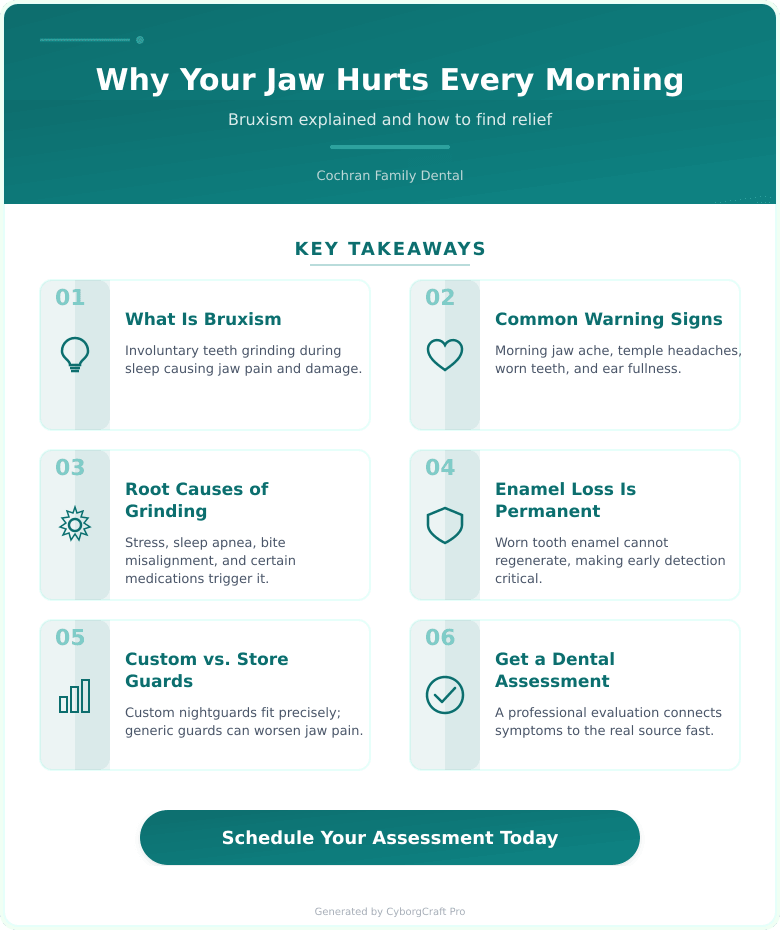
Morning jaw pain from teeth grinding is a common but often overlooked dental condition where the jaw muscles and joints become sore due to unconscious clenching or grinding during sleep. Left unaddressed, it can cause serious, lasting damage to your teeth and surrounding structures.
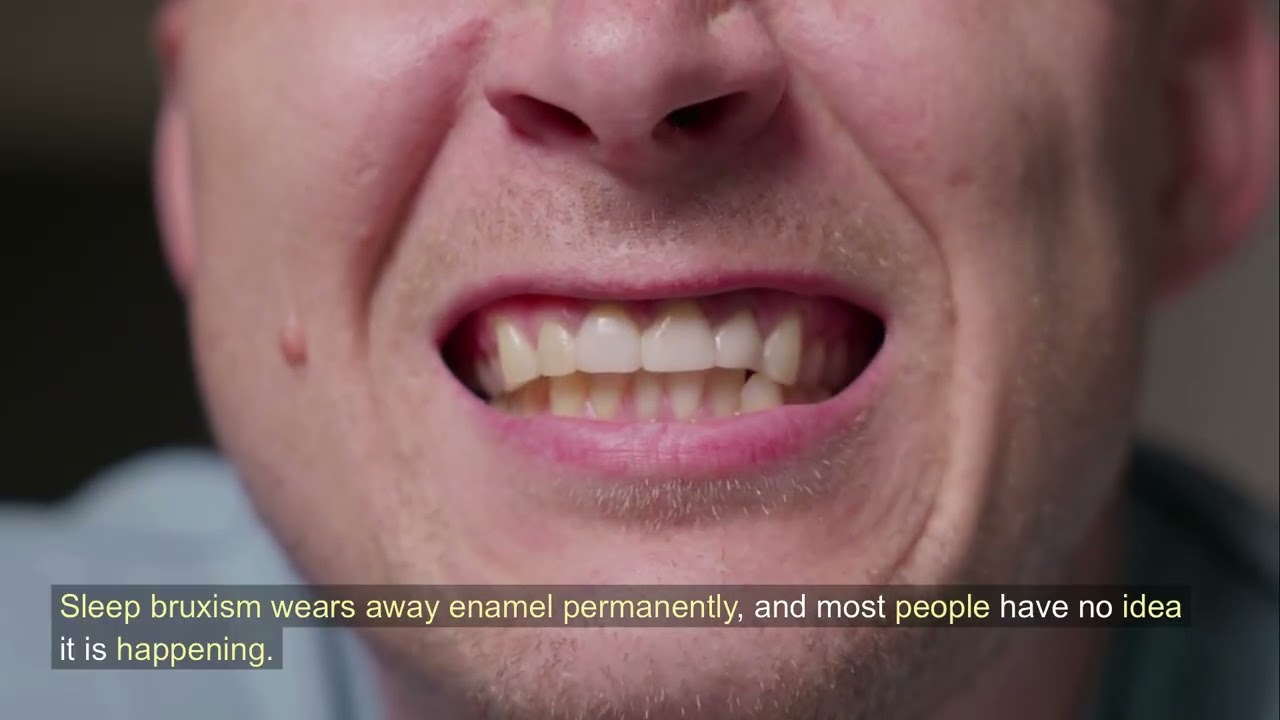
This guide focuses specifically on morning jaw pain caused by bruxism (teeth grinding), what it means for your dental health, and how a custom nightguard can offer lasting relief.
Bruxism Definition: Bruxism is the involuntary clenching, grinding, or gnashing of teeth during sleep or periods of stress, often causing jaw soreness, headaches, and accelerated tooth wear.
You wake up, reach over to turn off your alarm, and your jaw already aches. Maybe your temples throb too. You assume you slept wrong – but this keeps happening, and you are not sure why. The pattern almost always points to the same culprit: sleep bruxism, a condition that affects a notable share of adults, yet many go years without connecting their symptoms to grinding.
Why Jaw Pain Happens While You Sleep
Your jaw muscles are among the strongest in your body relative to their size. When you grind or clench during sleep, those muscles work hard for hours straight – without you ever knowing. By morning, they are fatigued, inflamed, and sore.
The most common causes of sleep bruxism include:
- Chronic stress and anxiety that does not fully release during sleep
- Misaligned bite that creates uneven pressure points
- Sleep disorders, particularly obstructive sleep apnea
- Certain medications, especially antidepressants
- Caffeine or alcohol consumption close to bedtime
Recent data shows that people with sleep apnea are significantly more likely to grind their teeth at night, which is why a full dental and health assessment matters when symptoms appear.
Signs You Are Grinding Your Teeth Without Knowing It
Most people with bruxism have no idea they do it. Here are the clearest warning signs:
- Dull, aching jaw pain every morning
- Headaches that start at the temples and feel worse upon waking
- Tooth sensitivity to hot or cold that has worsened over time
- Visible flattening or chipping on the biting surfaces of your teeth
- Ear pain or a feeling of fullness in your ears with no infection
- Tight or tired jaw muscles when you try to open wide
The most common mistake we see is patients treating the headaches with pain relievers for months before realizing their teeth are the source. Once tooth enamel wears down, it does not grow back. That is why catching bruxism early makes a real difference.
Thinking this sounds familiar? Let’s talk. At Cochran Family Dental, we can evaluate your symptoms and walk you through your options – no pressure. Contact us to schedule a quick assessment.
Custom Nightguard vs. Store-Bought Guard: Which One Actually Works?
Nightguard Options Compared
| Option | Cost Range (2025) | Fit Quality | Best For |
|---|---|---|---|
| Custom dental nightguard | $300 – $700 | Precision-fit to your bite | Moderate to severe bruxism |
| Boil-and-bite guard | $20 – $60 | Approximate fit only | Very mild grinding, short-term use |
| Generic store-bought | $10 – $30 | Universal, often bulky | Occasional, low-severity cases |
Where custom nightguards succeed: They are made from impressions of your actual teeth, so pressure distributes evenly. They are thinner, more comfortable, and far less likely to shift during sleep. They also protect against bite changes over time.
Where custom nightguards fall short: Upfront cost is higher than store options, and they require a dental visit for fitting and adjustments.
Where store-bought guards succeed: Immediate availability and low cost make them useful in a pinch or for very mild cases.
Where store-bought guards fail: A poor fit can actually change your bite over time or shift teeth. Some patients report worse jaw pain after using generic guards because of uneven pressure. They also wear out quickly with consistent grinding.
The verdict: For anyone grinding regularly enough to wake up sore, a custom-fitted guard from your dentist is the smarter long-term investment. The protection it offers your enamel and jaw joint is worth the difference in cost.
See how a custom guard approach works – explore our services or take a look at our teeth whitening in Leesburg, VA page for more on protecting and enhancing your smile.
Your Morning Jaw Pain Action Plan
- Step 1 – Track your symptoms: Keep a one-week log of morning jaw soreness, headaches, and tooth sensitivity. Note how many nights per week symptoms occur.
- Step 2 – Check your teeth visually: Use a flashlight and mirror to look for flat or chipped biting surfaces. These are reliable signs of grinding.
- Step 3 – Schedule a dental evaluation: A dentist can identify wear patterns, check your bite alignment, and assess your jaw joint during a standard exam.
- Step 4 – Get fitted for a custom guard if recommended: The process takes two short appointments – one for impressions, one to deliver and adjust the finished guard.
- Step 5 – Address contributing factors: Reduce evening caffeine and alcohol, build a wind-down sleep routine, and ask your dentist whether a sleep apnea screening makes sense.
- Step 6 – Follow up at six months: Nightguards need periodic checks to ensure fit remains accurate and wear patterns are monitored.
Pre-Appointment Checklist
- ☐ Write down how long morning jaw pain has been occurring
- ☐ Note any tooth sensitivity changes in the past year
- ☐ List current medications, including supplements
- ☐ Mention sleep habits, including any snoring or restless sleep
- ☐ Bring any previous dental X-rays if transferring care
Key Takeaways for Leesburg Patients in 2025
- Morning jaw pain is rarely random – it almost always traces back to grinding or clenching during sleep.
- Enamel loss from bruxism is permanent – early intervention prevents damage that cannot be reversed.
- Custom nightguards outperform store-bought options for fit, comfort, and long-term protection.
- Stress and sleep quality matter – grinding often intensifies during high-stress periods in 2025.
- A dental evaluation is the fastest path to answers – most bruxism cases are identified in a single visit.
Frequently Asked Questions
How do I know if I grind my teeth at night?
The clearest signs are morning jaw soreness, headaches near the temples, and visible flattening on your teeth. A dentist can confirm bruxism by examining wear patterns on your enamel during a routine exam.
Does a nightguard stop teeth grinding completely?
A nightguard does not stop the grinding reflex itself, but it protects your teeth and cushions the jaw joint while you sleep. Over time, some patients find the guard reduces the intensity of grinding as jaw muscles adapt to the new contact surface.
How much does a custom nightguard cost in 2025?
Custom dental nightguards typically range from $300 to $700 depending on material and complexity. Some dental insurance plans cover a portion of the cost when bruxism is clinically documented, so it is worth checking your benefits before paying out of pocket.
Can stress cause jaw pain in the morning?
Yes – stress is one of the leading triggers of sleep bruxism, which directly causes morning jaw pain. Managing stress through exercise, reduced screen time before bed, and relaxation techniques can reduce grinding frequency over time.
Is bruxism dangerous if left untreated?
Untreated bruxism can lead to significant enamel erosion, cracked teeth, TMJ disorder, and chronic headaches. The American Dental Association recommends addressing grinding early to avoid costly restorative treatment down the road.
How long does it take to get a custom nightguard?
Most patients receive their custom nightguard within two to three weeks of their first impression appointment. The fitting visit is quick, and adjustments can be made the same day if needed.
Your Next Step Starts with One Appointment
If your jaw is sore every morning, that is your body flagging something worth paying attention to. Patients in Leesburg, Ashburn, Purcellville, Hamilton, Round Hill, and the broader Loudoun County area have access to dental care that takes these symptoms seriously rather than brushing them off.
At Cochran Family Dental, located at 1503 Dodona Terrace SE in Leesburg, VA, we take a thorough look at what your bite and jaw are telling us before recommending any treatment. No guesswork. No upsells you do not need.
Ready to stop waking up in pain? Contact us today to schedule your evaluation. The sooner we catch what is happening, the more we can protect your teeth from further wear – and the better your mornings will feel.
This content is for educational purposes only and is not a substitute for professional dental advice, diagnosis, or treatment. If you are experiencing severe jaw pain, facial swelling, or difficulty opening your mouth, seek prompt dental or medical care.