
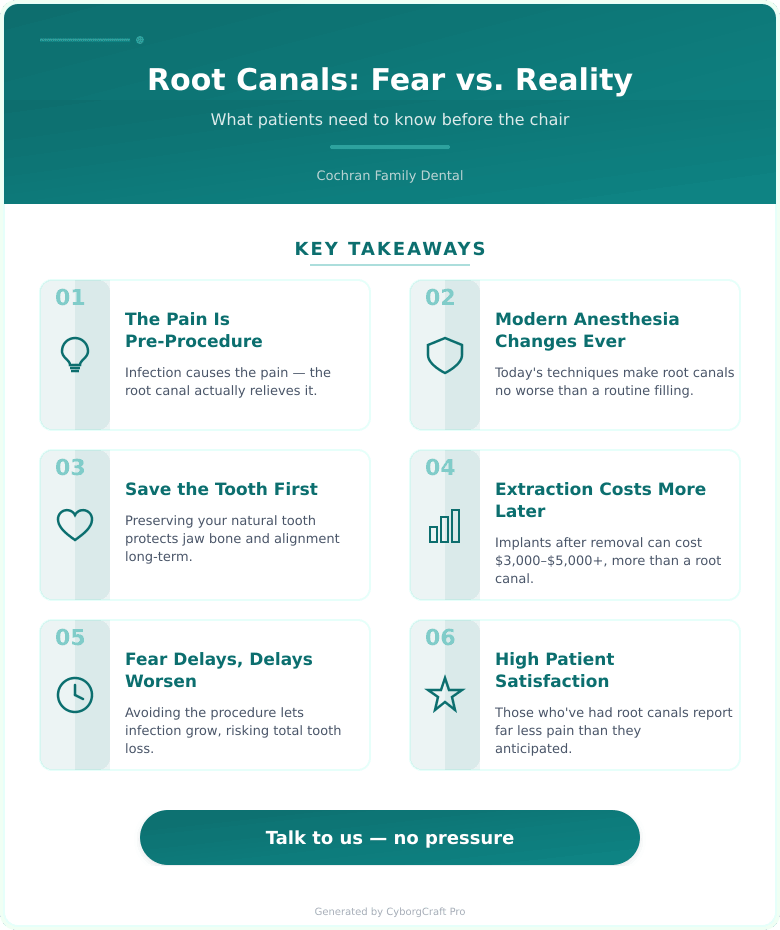
A root canal is an endodontic procedure that removes infected or damaged pulp tissue from inside a tooth, seals the canal, and saves the natural tooth from extraction. Most patients report the procedure itself is no more uncomfortable than getting a routine filling.
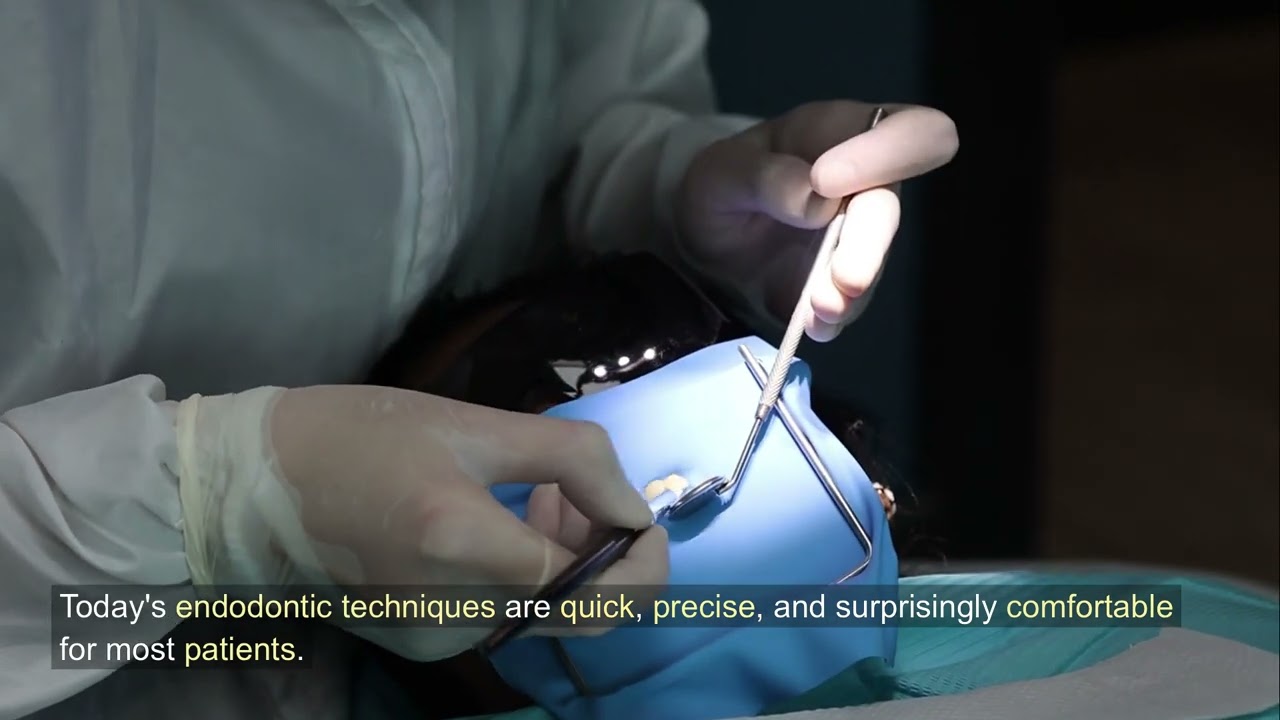
This guide focuses specifically on what actually happens during a root canal, why patient anxiety is often far greater than the real experience, and how to prepare so you walk in feeling confident rather than dreading something that does not deserve its reputation.
Root Canal Definition: An endodontic treatment that cleans, shapes, and seals the inner pulp chamber of a tooth to eliminate infection, relieve pain, and preserve the natural tooth structure long-term.
The most common mistake patients make is avoiding the procedure entirely because of fear – which allows the infection to worsen, leads to more pain, and often ends in tooth loss that could have been prevented. The fear of root canals is largely cultural myth, not medical reality. According to the American Dental Association, millions of root canals are performed each year and patient satisfaction rates are consistently high once the procedure is complete.
Why Root Canals Have Such a Bad Reputation
Here is the thing: the reputation is decades old. Before modern local anesthesia techniques and precision instruments, root canals were uncomfortable. That was then. The procedure you would receive today at a dental office like Cochran Family Dental bears almost no resemblance to what your parents or grandparents experienced.
Research consistently shows that patients who have never had a root canal anticipate significantly more pain than those who have actually gone through the procedure report experiencing. That gap between expectation and reality tells the whole story.
The pain you feel before a root canal – the throbbing, the pressure, the sensitivity – is from the infection itself. The procedure relieves that pain. Most patients leave the chair feeling significantly better than when they arrived.
Root Canal vs Tooth Extraction: Which Approach Works?
Where root canals succeed: They preserve your natural tooth, maintain bone structure in the jaw, keep surrounding teeth properly aligned, and typically cost less over time than replacement options.
Where root canals fall short: They require a follow-up crown in most cases, which adds to the overall cost and timeline. Heavily damaged teeth may not be good candidates if the root structure is compromised.
Where extraction succeeds: For teeth too damaged to save, extraction is faster and less expensive upfront. It removes the source of infection immediately.
Where extraction falls short: Losing a natural tooth creates a gap that can cause neighboring teeth to shift. Replacing the tooth with an implant or bridge adds significant cost – often more than a root canal and crown combined.
The verdict: If the tooth can be saved, saving it is almost always the better long-term choice for your oral health and your budget. Extraction should be the last option, not the default one.
| Option | Typical Cost Range (2025) | Timeline | Best For |
|---|---|---|---|
| Root Canal + Crown | $1,000 – $2,000+ | 2-3 visits over 2-4 weeks | Savable teeth with infected pulp |
| Extraction Only | $150 – $400 | 1 visit | Teeth too damaged to restore |
| Extraction + Implant | $3,000 – $5,000+ | 3-6 months total | When replacement is needed after removal |
Note: These are general industry cost ranges for 2025 and do not represent the specific fees of any dental office. Your actual cost depends on tooth location, complexity, and your insurance coverage.
Thinking about this for your situation? Let’s talk. Contact us and we’ll walk you through your options with no pressure.
What Actually Happens During the Procedure
Phase 1: Numbing and Preparation (15-20 minutes)
Your dentist applies a topical numbing gel before the injection so you barely feel the anesthetic going in. Once the area is fully numb, you should feel no pain – just mild pressure. Most patients are surprised by how comfortable this part is.
Key actions during this phase:
- Topical anesthetic applied to gum tissue
- Local anesthetic injected to block nerve sensation
- Dental dam placed to keep the area clean and dry
Phase 2: Cleaning the Canal (30-60 minutes)
Your dentist creates a small opening in the crown of the tooth and uses tiny files to remove the infected pulp. The canal is shaped and rinsed with an antimicrobial solution. You feel pressure but not pain.
Phase 3: Sealing and Restoration (30-45 minutes)
The cleaned canal is filled with a rubber-like material called gutta-percha, sealed, and a temporary or permanent crown is placed. The tooth is now protected and fully functional.
Your Root Canal Preparation Checklist
Walking in prepared makes a real difference in how you feel.
- ☐ Eat a normal meal before your appointment – you may be numb for a few hours after
- ☐ Take any prescribed antibiotics as directed before the procedure
- ☐ Ask about over-the-counter pain relief options for post-procedure soreness
- ☐ Arrange to have someone drive you home if sedation is used
- ☐ Bring your insurance card and any X-rays from previous dental visits
- ☐ Write down your questions so you do not forget to ask them
According to the National Institute of Dental and Craniofacial Research, untreated dental infections can spread to surrounding bone and tissue. Getting treated promptly is genuinely important, not just dental office advice.
Patients across Leesburg, VA and surrounding communities including Ashburn, Sterling, Purcellville, and Lansdowne regularly put off this procedure far longer than necessary. If you are in the Loudoun County area and have been avoiding treatment, 2025 is a good time to stop waiting.
See our teeth whitening options in Leesburg, VA if you are already thinking about restoring your smile after treatment.
Key Takeaways for Dental Patients in 2025
- The fear is worse than the procedure – patients consistently rate the experience far better than their expectations
- Modern anesthesia changes everything – you should feel pressure, not pain, during a properly administered root canal
- Saving the tooth beats replacing it – both in cost and long-term oral health outcomes
- Delaying makes it worse – infections do not resolve on their own and can spread
- Recovery is typically mild – most patients return to normal activity the next day with over-the-counter pain relief
Frequently Asked Questions
Does a root canal hurt?
Most patients feel little to no pain during the procedure because the area is fully numbed with local anesthetic. Any discomfort is usually mild soreness for 1-3 days afterward, which is well managed with ibuprofen or acetaminophen.
How long does a root canal take?
A straightforward root canal typically takes 60-90 minutes in a single visit, though complex cases may require a second appointment. Your dentist will give you a realistic estimate based on the specific tooth and how many canals it has.
How much does a root canal cost without insurance in 2025?
General industry pricing for root canals ranges from approximately $700 to $1,500 depending on which tooth is treated, with molars typically costing more than front teeth. A crown added afterward typically costs an additional $1,000 to $1,500. These are general market ranges, not specific to any single practice.
Is a root canal covered by dental insurance?
Most dental insurance plans cover a portion of root canal treatment, typically 50-80% of the procedure cost after your deductible is met. Coverage varies by plan, so calling your insurance provider before your appointment is always worth doing.
What are the signs you need a root canal?
Common signs include persistent tooth pain, prolonged sensitivity to heat or cold, a darkened tooth, swelling near the gum line, or a small pimple-like bump on the gum near the affected tooth. Some infected teeth cause no obvious symptoms at all, which is why regular X-rays matter.
How long is recovery after a root canal?
Most patients feel back to normal within 24-72 hours after treatment. Mild sensitivity or soreness in the treated area is common for a few days and typically responds well to over-the-counter pain relief.
Can I avoid a root canal by taking antibiotics?
Antibiotics can temporarily reduce infection symptoms but cannot eliminate the source of infection inside the tooth pulp. Without removing the infected tissue, the problem will return and often worsen over time.
Ready to Stop Putting It Off?
Here is what we know from working with patients across Leesburg and Loudoun County: most people who finally come in for their root canal wish they had done it sooner. The buildup of dread is almost always worse than the actual appointment.
At Cochran Family Dental, located at 1503 Dodona Terrace SE #210 in Leesburg, VA, we take patient comfort seriously. If you have been avoiding this procedure, come in and have an honest conversation about what to expect. No pressure. Just straight answers.
Ready to take the next step? Contact us today to schedule your appointment and get real information about your specific situation before deciding anything.