
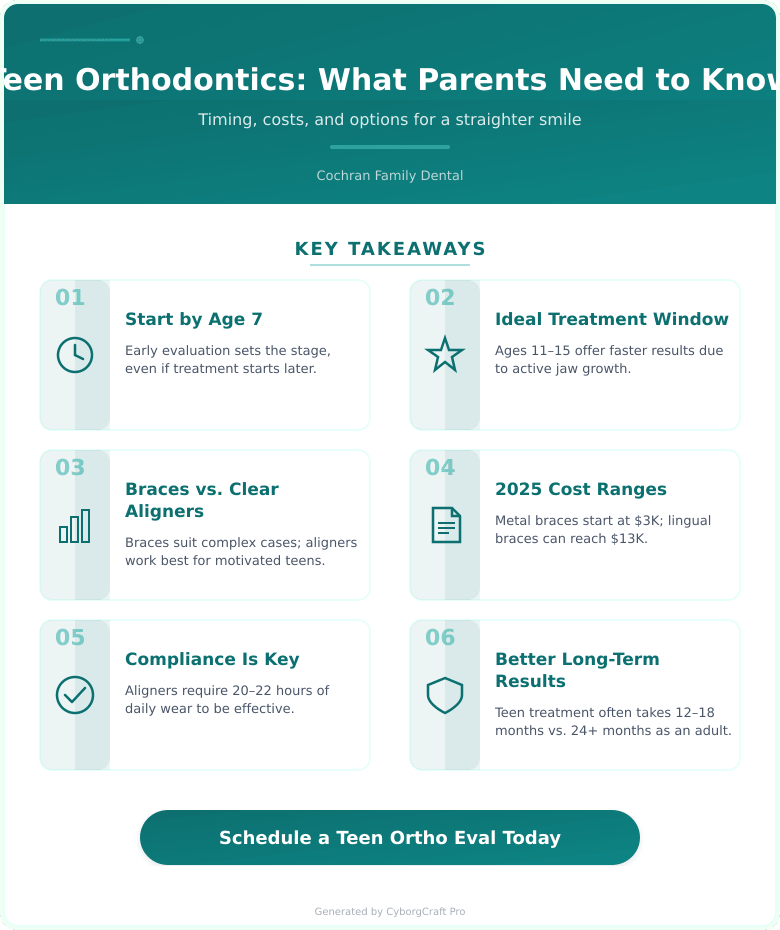
Teen orthodontic treatment is a professionally guided process that uses braces, aligners, or other appliances to shift teeth and jaws into proper alignment during adolescence. Starting at the right age can shorten total treatment time and produce better long-term results than waiting until adulthood.
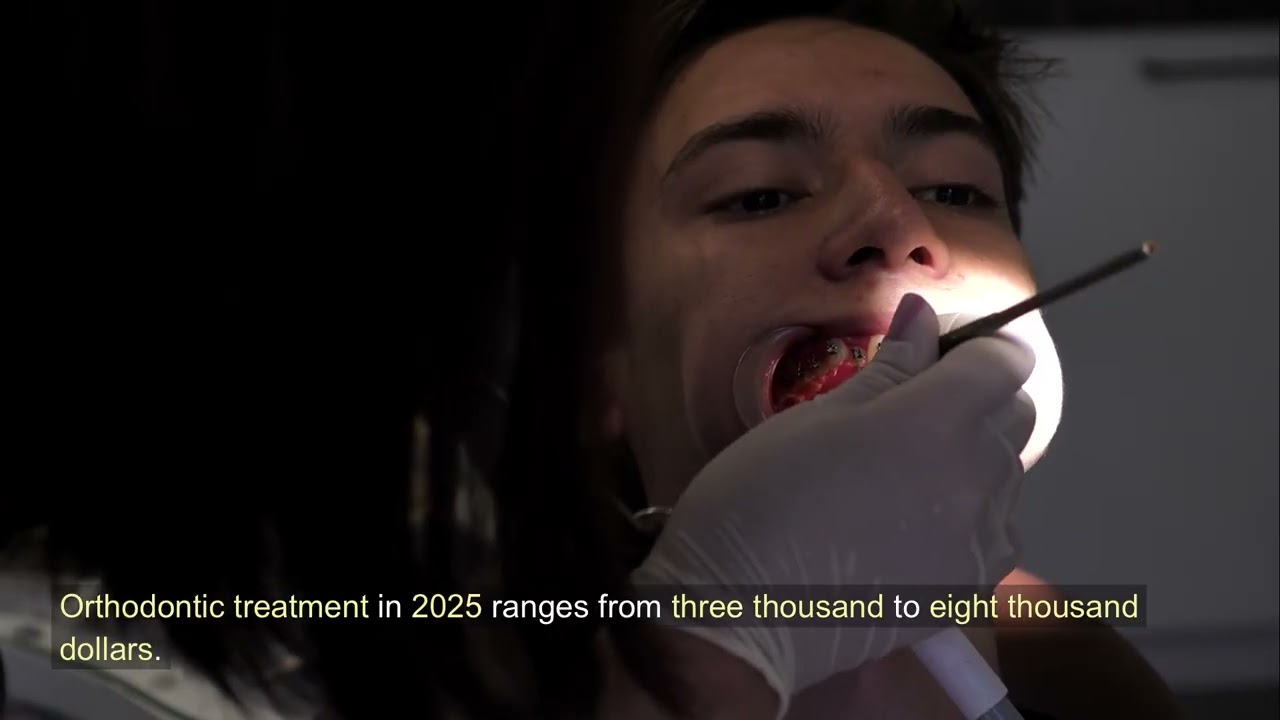
This guide focuses specifically on helping Leesburg parents understand when to start orthodontic treatment, what realistic costs look like in 2025, and which options actually fit a teenager’s daily life.
According to the American Dental Association, most children should have an orthodontic evaluation by age seven, even though active treatment typically doesn’t begin until the early teen years. That gap between evaluation and treatment is where a lot of parents get confused. Your child gets screened young, nothing happens for a few years, and then suddenly everyone is talking about braces. Here’s how to make sense of it all.
Why Timing Matters More Than Most Parents Realize
The most common mistake families make is waiting too long to have a serious orthodontic conversation with their dentist. Teen years, roughly between 11 and 15, represent a window where the jaw is still developing and teeth respond faster to guided movement. That’s not a scare tactic. It’s basic biology.
Recent data shows that teens who begin treatment during active jaw growth phases often see results in 12 to 18 months. Adults pursuing similar corrections frequently need 24 months or more, and sometimes require additional interventions. Starting at the right time isn’t just about speed. It’s about getting results that hold.
At Cochran Family Dental, we talk with parents about orthodontic readiness as part of regular checkups for their kids. It’s much easier to plan ahead than to react once crowding becomes severe.
Braces vs. Clear Aligners: Which Approach Works for Teens?
Traditional Braces vs. Clear Aligners: A Real Comparison
Where traditional metal braces succeed: They work on complex crowding, significant bite issues, and rotations that require precise control. They don’t rely on teen compliance since they can’t be removed. They’re also generally the lower-cost option upfront.
Where traditional metal braces fall short: Dietary restrictions are real. Popcorn, hard candy, and sticky foods are off the table. Oral hygiene takes more effort, and some teens feel self-conscious about the look.
Where clear aligners succeed: They’re nearly invisible, removable for eating and brushing, and tend to cause less irritation to soft tissue. Many teens prefer them socially. Products like Invisalign Teen include compliance indicators so parents can verify they’re being worn consistently.
Where clear aligners fall short: Results depend entirely on the teen wearing them 20 to 22 hours per day. Aligners are also less effective for severe bite corrections or complex rotations without attachments. Lost aligners can add replacement costs.
The verdict: For motivated teens with mild to moderate alignment issues, clear aligners are a strong choice. For complex corrections or teens who may not wear a removable device reliably, traditional braces deliver more predictable results. A dentist or orthodontist evaluation will tell you which category your child falls into.
| Option | Typical Cost Range (2025) | Average Treatment Time | Best For |
|---|---|---|---|
| Metal Braces | $3,000 – $6,000 | 18 – 24 months | Complex corrections, compliance concerns |
| Ceramic Braces | $4,000 – $7,500 | 18 – 24 months | Aesthetic preference, moderate complexity |
| Clear Aligners (e.g., Invisalign Teen) | $4,500 – $8,000 | 12 – 22 months | Motivated teens, mild to moderate cases |
| Lingual Braces | $8,000 – $13,000 | 18 – 30 months | Hidden correction, complex cases |
Pricing reflects general industry ranges for 2025. Actual costs vary by provider, case complexity, and geographic market.
Thinking about what makes sense for your teenager’s situation? Let’s talk. We’ll walk you through your options and what to realistically expect for your child’s case – no pressure. Contact us to set up a conversation.
What Insurance Actually Covers (and What It Doesn’t)
Dental insurance for orthodontics is genuinely confusing. Most plans that include orthodontic benefits cover a lifetime maximum per person, typically somewhere between $1,000 and $2,000. That’s not per year. That’s total, ever.
- Many plans cover orthodontics only for patients under 19
- Pre-authorization is usually required before starting treatment
- Waiting periods of 12 to 24 months may apply on newer plans
- Some plans exclude clear aligner brands specifically
- Flexible spending accounts (FSAs) and health savings accounts (HSAs) can cover the remaining balance with pre-tax dollars
Orthodontic treatment is widely pursued among adolescents, which reflects just how many families are working through these same insurance questions every year.
Your Teen Orthodontics Action Plan
- Step 1 – Schedule a screening: Ask your family dentist to assess jaw development and tooth alignment at your teen’s next checkup. Early evaluation guides better timing decisions.
- Step 2 – Review your insurance benefits: Call your insurance provider before any consultation. Ask specifically about lifetime orthodontic maximums and whether clear aligners are covered under current 2025 plan terms.
- Step 3 – Get a full orthodontic consultation: X-rays, bite analysis, and photos give the provider a complete picture. This appointment determines which approach fits your teen’s actual case.
- Step 4 – Compare payment options: Most orthodontic practices offer in-house payment plans. Compare monthly costs alongside total out-of-pocket figures before committing.
- Step 5 – Involve your teen: Compliance drives results, especially with aligners. A teen who understands the process and chooses to participate tends to complete treatment faster with fewer setbacks.
Pre-Appointment Preparation Checklist
- ☐ Gather current dental insurance card and benefit summary
- ☐ Bring a list of any orthodontic concerns (crowding, spacing, bite issues)
- ☐ Note your teen’s current age and approximate growth stage
- ☐ Ask about financing options and monthly payment structures
- ☐ Request a written treatment plan with itemized cost breakdown
Key Takeaways for Leesburg Parents in 2025
- Age matters – Early teen years offer the best biological window for faster, more effective treatment
- Options vary – Braces and clear aligners each have real strengths depending on your teen’s specific needs and habits
- Insurance has limits – Most plans cap orthodontic benefits at a lifetime maximum, so verify your coverage before treatment starts
- Compliance is part of the treatment – Clear aligners only work if worn consistently, making your teen’s buy-in essential
- Plan ahead financially – FSA and HSA accounts can reduce your effective out-of-pocket cost significantly
This content is for informational purposes only and is not a substitute for professional dental advice. Please consult a licensed dental provider for guidance specific to your teen’s oral health needs.
Frequently Asked Questions
What is the best age to start orthodontic treatment for a teenager?
Most orthodontists recommend beginning treatment between ages 11 and 14, when the jaw is still developing. An early evaluation at age seven helps identify future needs, but active treatment typically starts when most permanent teeth have come in.
How much does teen orthodontic treatment cost without insurance?
Without insurance, teen orthodontic treatment typically ranges from $3,000 to $8,000 depending on the method and case complexity in 2025. Metal braces sit at the lower end while clear aligners and ceramic braces tend to cost more. Most offices offer monthly payment plans.
Are clear aligners as effective as braces for teenagers?
Clear aligners can be equally effective for mild to moderate cases when worn consistently for 20 to 22 hours per day. For complex bite problems or significant crowding, traditional braces typically provide more controlled results.
How long does orthodontic treatment usually take for teens?
Average treatment time for teenagers ranges from 12 to 24 months depending on the severity of alignment issues and the method used. Teens who start during active jaw growth phases often complete treatment closer to the shorter end of that range.
Does dental insurance cover braces for teenagers?
Many dental plans include an orthodontic benefit with a lifetime maximum between $1,000 and $2,000, typically for patients under age 19. Coverage varies significantly by plan, and some policies exclude specific clear aligner brands, so reviewing your benefits before treatment starts is worth the time.
What happens if my teen loses or breaks a clear aligner?
Most Invisalign Teen plans include a set number of free replacement aligners specifically because loss and breakage happen. Confirm replacement policies and associated costs before committing to an aligner-based treatment plan.